Still Using Excel for Payroll? Here’s What It’s Costing Your Business
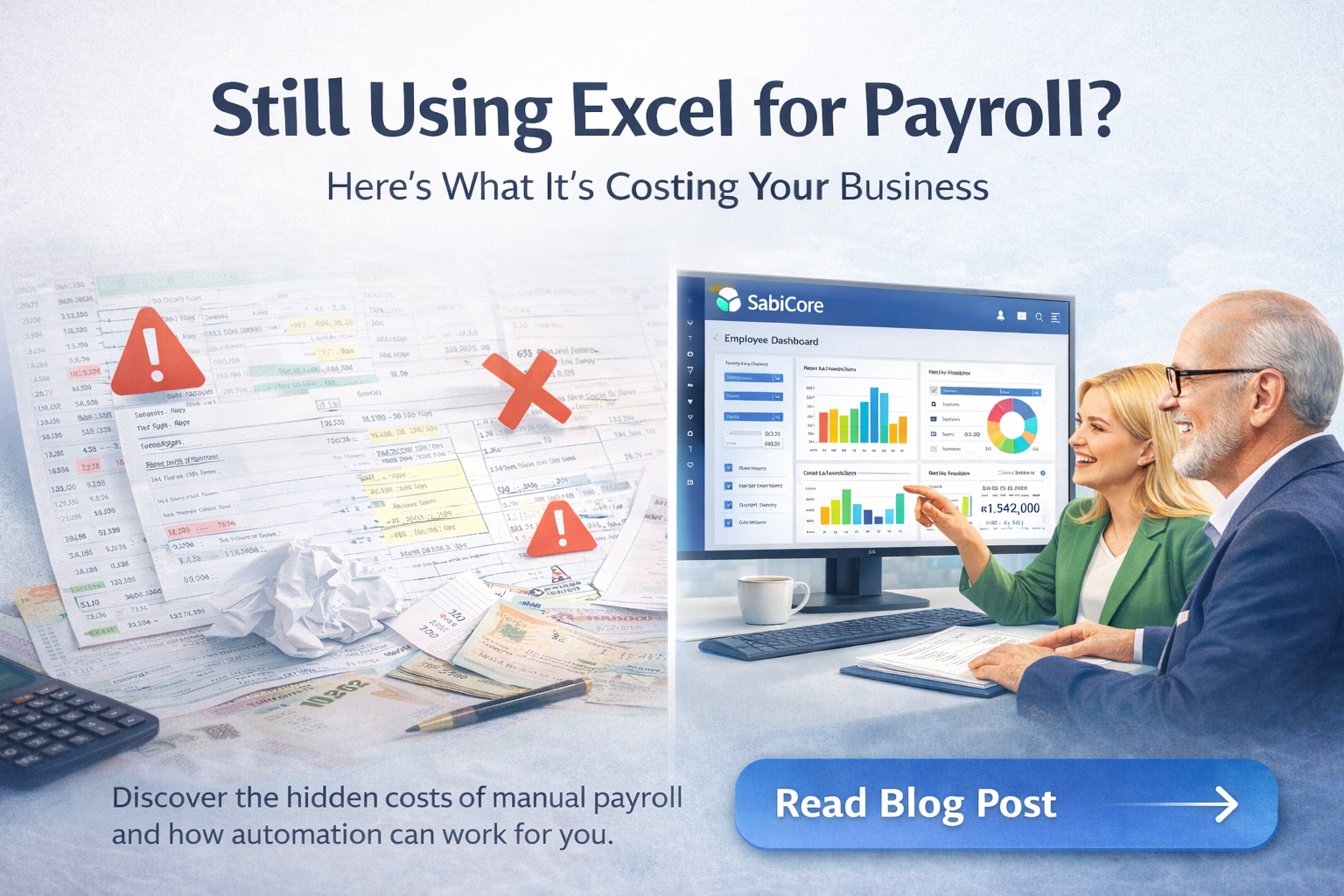
Still Using Excel for Payroll? Here’s What It’s Costing Your Business
For many businesses, Excel feels like a reliable and cost-effective tool for managing payroll.
But as your business grows, what once worked efficiently can quickly become a source of errors, delays, and compliance risks.
If you’re still managing payroll manually, it’s important to understand what it may truly be costing your business.
1. Costly Human Errors
Excel relies entirely on manual input and that leaves room for mistakes.
A single incorrect formula or miscalculation can result in:
- Incorrect salary payments
- Wrong tax deductions
- Employee dissatisfaction
Over time, these small errors can lead to significant financial and operational issues.
2. Time-Consuming Processes
Manual payroll processing requires:
- Repetitive data entry
- Constant verification
- Cross-checking calculations
What should ideally take minutes often stretches into hours or even days.
This reduces productivity and limits your team’s ability to focus on more strategic tasks.
3. Increased Compliance Risk
Payroll in Nigeria involves multiple statutory obligations, including:
- PAYE (Pay As You Earn)
- Pension contributions
- NHF (National Housing Fund) - A Nigerian scheme where employees contribute a portion of their salary to support access to affordable housing loans.
- NSITF (Nigeria Social Insurance Trust Fund) - A government agency that provides insurance and compensation to employees for workplace injuries, disabilities, or death.
Managing these manually increases the risk of:
- Late submissions
- Incorrect remittances
- Regulatory penalties
Excel does not provide updates on changing regulations or built-in compliance checks.
4. Lack of Centralized Employee Management
Excel is not designed for comprehensive HR management.
This often leads to:
- Disconnected employee records
- Separate tracking systems for leave and attendance
- Limited visibility into workforce data
As a result, managing employees becomes more complex and less efficient.
5. Poor Scalability
While Excel may work for very small teams, it becomes increasingly difficult to manage as your workforce grows.
Manual processes do not scale effectively, leading to:
- Increased errors
- More administrative workload
- Reduced efficiency
Growth should simplify operations not complicate them.
A Smarter Approach to Payroll & HR Management
Modern businesses are moving towards automated solutions that:
- Process payroll in minutes
- Automatically calculate taxes and statutory deductions
- Centralize employee data
- Reduce errors and improve accuracy
- Support compliance with ease
SabiCore provides a unified platform designed to help businesses simplify payroll and employee management without the stress of manual processes.
While Excel may seem like a convenient solution, the hidden costs can outweigh the benefits over time.
By adopting a more efficient system, businesses can save time, reduce risk, and focus on growth.
Ready to simplify your payroll and employee management?
Start saving time, reducing errors, and staying compliant, all in one place.
👉 Get started by registering your company on sabicore.com today